Original Article

소아다기관염증증후군과 가와사키병의 비교

김범준1https://orcid.org/0000-0001-5033-4568, 임정우1https://orcid.org/0000-0002-0227-3809, 이수영1,2,*https://orcid.org/0000-0002-5354-3135, 정대철1,2https://orcid.org/0000-0003-0934-817X
Beom Joon Kim1https://orcid.org/0000-0001-5033-4568, Jung Woo Rhim1https://orcid.org/0000-0002-0227-3809, Soo-Young Lee1,2,*https://orcid.org/0000-0002-5354-3135, Dae Chul Jeong1,2https://orcid.org/0000-0003-0934-817X
Author Information & Copyright
1가톨릭대학교 의과대학 소아과학교실
2가톨릭대학교 의과대학 백신바이오연구소
1Department of Pediatrics, College of Medicine, The Catholic University of Korea, Seoul, Korea
2The Vaccine Bio Research Institute, College of Medicine, The Catholic University of Korea, Seoul, Korea
*Corresponding author: Soo-Young Lee, Department of Pediatrics, Bucheon St. Mary’s Hospital, The Catholic University of Korea, 327 Sosa-ro, Wonmi-gu, Bucheon, Korea, E-mail: sylee@catholic.ac.kr

ⓒ Copyright 2025 Korean Society of Kawasaki Disease. This is an Open-Access article distributed under the terms of the Creative Commons Attribution Non-Commercial License (http://creativecommons.org/licenses/by-nc/4.0/) which permits unrestricted non-commercial use, distribution, and reproduction in any medium, provided the original work is properly cited.

Received: May 01, 2025; Revised: Jun 07, 2025; Accepted: Jun 13, 2025

Published Online: Dec 31, 2025

Abstract

Background:

In Korea, studies on multisystem inflammatory syndrome in children (MIS-C) are mostly review articles or case reports, and there are limited original articles directly comparing MIS-C and Kawasaki disease (KD). The purpose of this study was to compare the characteristics of MIS-C and KD in Korean children.

Methods:

Medical records of 22 patients hospitalized with MIS-C from January 2020 to December 2022 were retrospectively reviewed. The control group included 140 patients hospitalized with KD before the COVID-19 pandemic.

Results:

Compared to the KD group (n = 140), the MIS-C group (n = 22) was older and had a longer hospitalization (P < 0.001). All patients in both groups had at least one KD-like features (e.g., rash, conjunctivitis, or mucositis), but complete KD was more common in the KD group than in the MIS-C group (P = 0.020). Laboratory abnormalities, such as elevated C-reactive protein (CRP), were found in both groups, but some laboratory abnormalities, such as thrombocytopenia or hypoalbuminemia, were more common in the MIS-C group (P < 0.001). Multi-organ dysfunction was observed in 100% of the MIS-C group and 13% of the KD group (P < 0.001). The infectious trigger, severe acute respiratory syndrome coronavirus 2 (SARS-CoV-2), was identified in 100% of the MIS-C group, but no pathogen was identified in the KD group (P < 0.001).

Conclusion:

KD-like features and systemic inflammation (i.e., CRP ≥ 3.0 mg/dL) are shared findings of MIS-C and KD, whereas organ dysfunction and SARS-CoV-2 are distinct findings of MIS-C that distinguish it from KD.

Keywords: Multisystem Inflammatory Syndrome in Children; Kawasaki Disease; Korea

서론

일반적으로 소아 코로나바이러스감염증-19(coronavirus disease 2019, COVID-19)의 임상양상은 성인보다 경하다고 알려져 있다[1,2]. 하지만, 일부 소아 COVID-19 환자에서 신종 코로나바이러스(severe acute respiratory syndrome coronavirus 2, SARS-CoV-2) 감염 후 합병증으로 소아다기관염증증후군(multisystem inflammatory syndrome in children, MIS-C)이 발생한다[35]. MIS-C의 특징은 SARS-CoV-2 감염에 의해 촉발된 전신염증과 장기부전이다[6]. 가와사키병(Kawasaki disease, KD) 진단 기준에 포함되는 ‘KD-유사증상(KD-like features)’이 MIS-C 환자에서 관찰되는 것은 임상적으로 흥미롭지만, MIS-C와 KD가 혼돈되는 원인이 되기도 한다[5].

2023년 5월 팬데믹 종식 선언 후 COVID-19뿐만 아니라, MIS-C 발생빈도는 현저하게 감소하였다[7,8]. 하지만 최근까지 SARS-CoV-2의 소규모 유행이 지속되어 실제 임상에서 MIS-C 환자를 마주칠 수 있다[9]. 국내외적으로 MIS-C와 KD의 특징을 비교한 다수의 연구들이 보고되었으며, 이러한 연구는 두 질환의 병인 연구와 치료성적 향상에 도움이 될 것으로 기대된다[1012]. 하지만, 우리나라의 MIS-C 연구는 주로 종설이나 증례 보고에 편중되어 있고, MIS-C와 KD를 직접 비교한 원저 연구는 제한적이다[13,14]. 본 연구에서, 저자들은 국내 소아의 MIS-C와 KD의 특징을 비교하였다.

대상과 방법

1. 대상

2020년 1월부터 2022년 12월까지(COVID-19 팬데믹 3년) 가톨릭의대 4개 병원(서울성모병원, 은평성모병원, 부천성모병원, 대전성모병원) 소아청소년과에 입원한 MIS-C 환자 22명의 의무기록을 후향적으로 조사한 연구[15]이다. 모든 대상환자는 MIS-C 사례정의[16]를 만족하였고, 입원기간 동안 MIS-C에 대한 기본적인 검사(혈액, 심초음파 등)와 한가지 이상의 면역조절제 치료를 받았다. MIS-C 사례정의를 만족하지 못한 환자, MIS-C에 대한 검사와 치료를 받지 않았거나 이에 대한 기록 누락된 환자, 그리고 치료 도중에 다른 병원으로 전원된 환자는 제외시켰다. MIS-C와 KD의 특징을 비교하기 위한 대조군으로, 저자들의 COVID-19 팬데믹 발생 이전 연구[17]에 포함되었던 KD 환자 140명을 선택하였다.

2. 정의

MIS-C의 진단에는 미국 국가와 영토 역학위원회/질병통제예방센터(Council of State and Territorial Epidemiologists/Centers for Disease Control and Disease Prevention, CSTE/CDC)의 사례정의[16]를 이용하였다. CSTE/CDC의 사례정의는 (1) 입원이 필요한 중증도의 21세 미만 발열 환자, (2) 전신염증(C-reactive protein [CRP] ≥ 3.0 mg/dL), (3) 두 개 이상의 장기부전 및 (4) SARS-CoV-2 감염의 실험실적 증거로 구성된다. CSTE/CDC의 장기부전은, 이전의 정의[2]와 다르게, 5가지 장기침범으로 제한된다. i) 심장 침범: 심박출률(ejection fraction, EF) < 55%, 관상동맥 이상(coronary artery abnormalities, CAAs), 또는 트로포닌(troponin) 상승, ii) 점막피부 침범: 발진, 결막염, 구인두의 염증, 또는 손발의 변화, iii) 쇼크: 의무기록의 임상적 입증, iv) 소화기 침범: 복통, 구토, 또는 설사 및 v) 혈액학적 침범: 혈소판 수 < 150,000 /μL 또는 절대 림프구 수 < 1,000 /μL.

KD는 미국심장학회(American Heart Association, AHA) 기준[18]에 따라 완전형(complete)과 불완전형(incomplete)으로 진단하였다. 일차치료 실패 또는 정맥주사 면역글로불린(intravenous immunoglobulin, IVIG) 저항성은 첫 번째 면역조절제 투약 종료 36시간 후에도 발열이 지속되어 두 번째 면역조절제(스테로이드, 생물학적제제 등)가 투여된 경우로 정의하였다[19]. CAAs는 AHA 기준에 따라, Z score 2.0 이상은 관상동맥 확장으로, Z score 2.5 이상은 관상동맥류로 정의하였다[18]. KD 환자의 장기부전은 명확히 정의되지 않아[20,21], MIS-C 환자와 동일하게 CSTE/CDC의 장기부전 정의를 적용하였다.

3. 관찰항목

임상적 항목으로, 연령, 성별, 입원기간, 발열기간, KD-유사증상(발진, 결막염, 구인두의 염증, 손발의 변화 및 경부 림프절종대), KD 진단기준 만족, 완전형 KD 및 MIS-C 사례정의 만족 여부를 조사하였다. 검사실 항목으로, 혈색소, 백혈구, 절대 호중구(absolute neutrophil count), 혈소판, 적혈구 침강속도(erythrocyte sedimentation rate, ESR), CRP, 나트륨, 알부민, 아스파라진산 아미노전이효소(aspartate aminotransferase, AST), 알라닌 아미노전이효소(alanine aminotransferase, ALT), 농뇨 및 심초음파 결과를 확인하였다. 미생물학 검사로, 중합효소연쇄반응(polymerase chain reaction, PCR), 혈청학 및 배양 결과를 조사하였다. MIS-C 환자는 SARS-CoV-2에 대한 PCR, 항원 및 항체 검사 결과도 확인하였다. 치료와 임상경과 측면에서, IVIG, 아스피린, 일차치료 실패, 스테로이드, 생물학적제제, 경험적 항생제, 중환자실 입실, 사망 여부 등을 조사하였다.

4. 통계분석

대상환자는 MIS-C군(n = 22)과 KD군(n = 140)으로 양분하여 통계 분석하였다. 범주형 자료는 빈도와 퍼센트로, 연속형 자료는 중앙값과 범위로 나타냈다. 범주형 자료의 비교는 Fisher 정확 검정을, 연속형 자료의 비교는 Mann-Whitney U 검정을 이용했다. 모든 통계분석은 양측 검정으로, P < 0.05를 통계적으로 유의한 것으로 간주하였다. 통계 프로그램은 IBM SPSS Statistics software Version 24.0 (IBM, USA)을 이용했다.

결과

1. 임상적 특징

Table 1에는 MIS-C군과 KD군의 임상적 특징과 CSTE/CDC 정의를 나타냈다. MIS-C군(9.1세) 연령의 중앙값은 KD군(1.8세)보다 높았고 입원기간의 중앙값도 MIS-C군에서 높았다(P < 0.001). 남녀 비율과 발열기간에는 유의한 차이가 없었다. 두 군의 모든 환자는 한 가지 이상의 KD-유사증상을 나타냈다. KD 진단기준 만족 비율(P = 0.002)과 완전형 KD 비율(P = 0.020)은 MIS-C군보다 KD군에서 높았다.

Table 1. Clinical characteristics and CSTE/CDC definition of the MIS-C and KD groups
Variables MIS-C
(n = 22)
KD
(n = 140)
P value
Clinical characteristics
 Age (year) 9.3 (0.9–16.0) 1.8 (0.2–9.8) < 0.001
 Male sex 11 (50.0) 86 (61.4) 0.353
 Length of hospital stays (day) 10 (4–18) 6 (3–13) < 0.001
 Fever duration (day) 5 (3–15) 5 (3–9) 0.602
 Met AHA criteria for KD 19 (86.4) 140 (100.0) 0.002
 Complete KD 11 (50.0) 106 (75.7) 0.020
CSTE/CDC definition
 Children and adolescents hospitalized with fever 22 (100.0)1) 140 (100.0) 1.000
 Systemic inflammation (CRP ≥ 3.0 mg/dL) 22 (100.0)1) 114 (81.4) 0.026
 Organ dysfunction ≥ 2/5 categories2) 22 (100.0)1) 18 (12.9)3) < 0.001
 Evidence of relevant pathogens (e.g., SARS-CoV-2) 22 (100.0)1) 0 (0.0) < 0.001

Data are presented as frequency (%) or median (range).

1) As defined in the study methods, all patients in the MIS-C group met all four CSTE/CDC definition.

2) The CSTE/CDC definition includes five types of organ dysfunction (i.e., cardiac, mucocutaneous, shock, gastrointestinal, and hematologic) [15].

3) For KD patients, “mucocutaneous symptoms + CAAs” or “mucocutaneous symptoms + thrombocytopenia” were considered multi-organ dysfunction.

CSTE/CDC: Council of State and Territorial Epidemiologists/Centers for Disease Control and Disease Prevention; MIS-C: multisystem inflammatory syndrome in children; AHA: American Heart Association; KD: Kawasaki disease; CRP: C-reactive protein; SARS-CoV-2: severe acute respiratory syndrome coronavirus 2; CAAs: coronary artery abnormalities.

Download Excel Table

MIS-C군의 모든 환자(100.0%, 22/22)에서 전신염증(CRP ≥ 3.0 mg/dL)과 다장기부전이 확인되었다. 침범된 장기별로는 점막피부 95.5%(21/22), 소화기 90.9%(20/22), 혈액학 77.3%(17/22), 심장 54.5%(12/22), 쇼크 27.3%(6/22)였고, 침범된 장기 수의 중앙값은 3.0(2.0–5.0)이었다. MIS-C군의 모든 환자는 미생물학 검사에서 관련 병원체(즉, SARS-CoV-2)가 확인되었다. KD군에서, 전신염증은 81.4%(114/140)에서 관찰되었고(P = 0.026), 다장기부전은 12.9%(18/140)에서 확인되었다(P < 0.001). 침범된 장기별로는 점막피부 100.0%(140/140), 심장 11.4%(16/140), 혈액학 1.4%(2/140)였고, 침범된 장기 수의 중앙값은 0.0(0.0–2.0)이었다. KD군의 미생물학 검사에서 유의미한 병원체는 검출되지 않았다(P < 0.001).

2. 검사실 결과

Table 2에는 MIS-C군과 KD군의 검사실 결과를 비교하였다. 두 군 모두에서 빈혈, 백혈구증가증, 호중구증가증, 혈소판감소증, ESR 상승, CRP 상승, 저나트륨혈증, 저알부민혈증, AST 증가 등의 검사실적 이상이 확인되었다. 검사항목별로 비교하면, MIS-C군보다 KD군에서 혈색소의 중앙값이 낮았고 백혈구, 호중구 및 ESR의 중앙값은 높았다(P < 0.01). 반면에, KD군보다 MIS-C군에서 혈소판, 나트륨 및 알부민의 중앙값이 낮았고, AST의 중앙값은 높았다(P < 0.05). CRP의 중앙값은 MIS-C군에서 높았으나 유의하지는 않았다. ALT의 중앙값과 농뇨의 출현에도 유의한 차이는 없었다.

Table 2. Laboratory results of the MIS-C and KD groups
Variables MIS-C
(n = 22)
KD
(n = 140)
P value
Hemoglobin (g/dL) 12.1 (9.6–14.9) 11.4 (8.8–13.5) 0.009
WBC count (103 /μL) 7.2 (2.3–20.4) 14.1 (2.3–29.7) < 0.001
Absolute neutrophil count (103 /μL) 6.0 (6.6–15.7) 8.7 (15.0–23.0) < 0.001
Platelet count (103 /μL) 130 (62–431) 346 (99–647) < 0.001
ESR (mm/h) 26 (2–120) 54 (5–106) 0.002
CRP (mg/dL; normal < 0.5) 10.1 (3.2–25.5) 7.0 (0.2–18.1) 0.061
Sodium (mmol/L) 134 (127–139) 136 (127–146) 0.005
Albumin (g/dL) 2.9 (2.4–4.1) 4.0 (2.7–4.6) < 0.001
AST (U/L) 55 (33–579) 42 (18–879) 0.026
ALT (U/L) 54 (13–232) 32 (7–4514) 0.298
Pyuria: ≥ 10 WBC/hpf 7 (31.8) 48 (34.3) 1.000

Data are presented as frequency (%) or median (range).

MIS-C: multisystem inflammatory syndrome in children; KD: Kawasaki disease; WBC: white blood cell; ESR: erythrocyte sedimentation rate; CRP: C-reactive protein; AST: aspartate aminotransferase; ALT: alanine aminotransferase; hpf: high-power field.

Download Excel Table
3. 치료와 임상경과

Table 3에는 MIS-C군과 KD군의 치료와 임상경과를 요약하였다. 두 군의 모든 환자는 KD에 대한 표준치료(IVIG와 아스피린)를 받았다. 일차치료 실패는 KD군(15.7%)보다 MIS-C군(31.8%)에서 높았으나 유의하지는 않았다. 스테로이드, 경험적 항생제, 혈압상승제 및 중환자실 입실은 KD군보다 MIS-C군에서 더 높은 빈도로 시행되었다(P < 0.01). KD군에서 혈압상승제나 중환자실 입실이 필요한 환자는 없었다. 생물학적제제(즉, anakinra)는 MIS-C군의 환자 1명(4.5%)에서만 사용되었다. CAAs 합병증의 빈도는 KD군(11.4%)보다 MIS-C군(22.7%)에서 높았으나 유의한 차이는 아니었다. 두 군 모두에서 사망자는 없었다.

Table 3. Treatment and outcomes of the MIS-C and KD groups
Variables MIS-C
(n = 22)
KD
(n = 140)
P value
KD standard treatment (i.e., IVIG and aspirin) 22 (100.0) 140 (100.0) 1.000
Initial treatment failure (i.e., IVIG resistance) 7 (31.8) 22 (15.7) 0.078
Systemic steroids 20 (90.9) 15 (10.7) < 0.001
Biologics (IL-1 or IL-6 inhibitor) 1 (4.5) 0. (0.0) 0.136
Empiric antibiotics 19 (86.4) 76 (54.3) 0.005
Vasoactive agents 5 (22.7) 0 (0.0) < 0.001
ICU admission 5 (22.7) 0 (0.0) < 0.001
Coronary artery complications 5 (22.7) 16 (11.4) 0.169
Mortality 0 (0.0) 0 (0.0) 1.000

Data are presented as frequency (%).

MIS-C: multisystem inflammatory syndrome in children; KD: Kawasaki disease; IVIG: intravenous immunoglobulin; IL: interleukin; ICU: intensive care unit.

Download Excel Table

고찰

COVID-19 팬데믹 초기, Verdoni et al. [3]은 SARS-CoV-2 감염 후 KD-유사증상, 전신염증 및 다장기부전을 나타내는 소아와 청소년 환자의 급증을 보고하였다. 이 질환의 발생률은 팬데믹 이전의 이탈리아 KD 발생률의 30배 이상으로 높았다. 이 심각한 COVID-19의 합병증은 영국, 스페인, 프랑스, 미국, 인도, 브라질과 우리나라를 포함한 다른 국가에서도 보고되었으며, 이후 ‘COVID-19 연관 소아다기관염증증후군(MIS-C)’으로 명명되었다[1,2]. Verdoni et al. [3] 환자 10명의 초기 진단명은 모두 KD였으며, 이중 5명은 완전형 KD였다. 심초음파 검사에서 이상(EF 감소, 판막 이상, 심낭염 등)을 보인 환자는 6명이었고, 이중 2명에서 CAAs이 확인되었다. 쇼크가 5명에서 관찰되었고, 이중 2명은 혈압상승제 치료가 필요했다. 모든 환자는 KD 표준치료(IVIG와 아스피린)를 받았고, 이중 8명은 추가로 스테로이드 치료가 필요했다. 또한 MIS-C 환자(n = 10)는 COVID-19 팬데믹 이전의 KD 환자(n = 19)와 비교하여, 좀 더 나이(평균 연령 7.5세)가 많고 심한 검사실 소견(림프구감소증, 혈소판감소증, 저나트륨혈증, 고페리틴혈증 등)을 나타내었다.

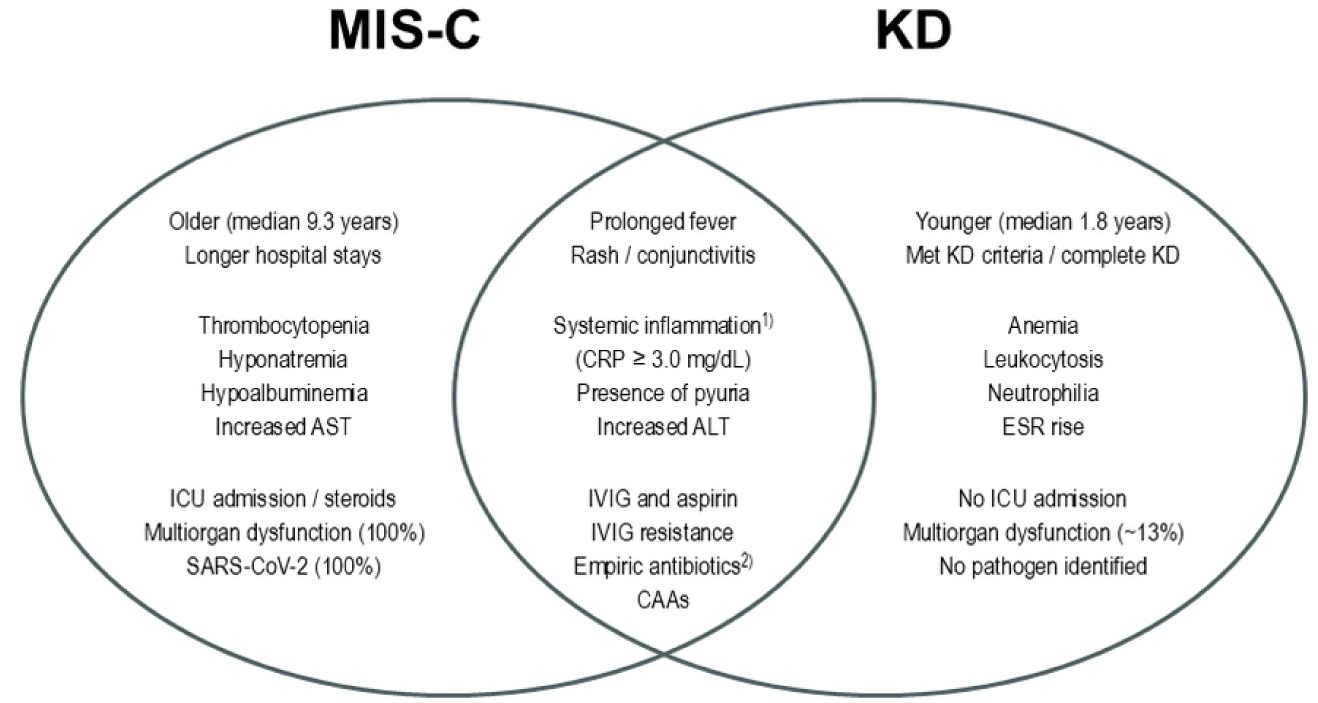
본 연구는 국내 소아 환자를 대상으로, MIS-C와 KD의 임상적 특징, 검사실 결과 및 치료와 임상경과를 비교하였다. 본 연구 결과에서 확인된 MIS-C와 KD의 유사점과 차이점은 Fig. 1에 요약하였다. 본 연구에서, MIS-C의 연령 중앙값은 KD보다 높았다. KD-유사증상과 전신염증(CRP ≥ 3.0 mg/dL)은 MIS-C와 KD의 공통적인 특징이었으나, 다장기부전은 KD보다는 MIS-C에서 우세한 특징이었다. CSTE/CDC 정의[16]에 따라 모든 MIS-C 환자에서 SARS-CoV-2가 입증되었으나, KD 환자에서 검출된 유의미한 병원체는 없었다. 즉, 장기부전의 동반과 관련 병원체(즉, SARS-CoV-2)의 확인은 KD와 구분되는 MIS-C의 특징인 것이다.
kd-3-2-18-g1
Fig. 1. Similarities and differences between MIS-C and KD identified in this study. 1) Both groups showed elevated CRP, but the frequency of CRP ≥ 3.0 mg/dL was statistically higher in the MIS-C group (100.0%) than in the KD group (81.4%; see Tables 1 and 2). 2) A significant number of patients in both groups received empiric antibiotics, but the frequency of antibiotic treatment was statistically higher in the MIS-C group (86.4%) than in the KD group (54.3%; see Table 3). MIS-C: multisystem inflammatory syndrome in children; KD: Kawasaki disease; CRP: C-reactive protein; AST: aspartate aminotransferase; ALT: alanine aminotransferase; ESR: erythrocyte sedimentation rate; ICU: intensive care unit; IVIG: intravenous immunoglobulin; SARS-CoV-2: severe acute respiratory syndrome coronavirus 2; CAAs: coronary artery abnormalities.
Download Original Figure

검사실 결과의 비교에서, MIS-C와 KD는 빈혈, 혈소판감소증, ESR 상승, CRP 상승과 같은 심한 염증반응을 시사하는 검사실적 이상을 보였다. 유럽에서 MIS-C의 첫 보고[3,4]와 유사하게, 전반적인 검사실 소견은 KD보다는 MIS-C에서 좀 더 심한 양상이었다. 하지만, 일부 검사실적 이상(예: 빈혈, 백혈구증가증, ESR 상승 등)은 MIS-C보다는 KD에서 흔하였고, CRP의 중앙값도 두 질환에서 유의한 차이가 없었다. 즉 심한 염증반응은 MIS-C와 KD의 공통적인 특징이므로, 백혈구 수나 CRP 수치와 같이 일상적인 검사실 지표를 토대로 두 질환을 구분하기는 어렵다[1012]. Jeong & Lee [22]은 페리틴 수치가 MIS-C와 KD를 구분하는데 도움될 수 있다고 제안하기도 하였다. 두 질환을 구분하는 데 도움되는 검사실 지표에 대한 추가적 연구가 필요하다.

치료와 임상경과의 비교에서도 중요한 차이가 확인되었다. 두 질환 모두에서 IVIG와 아스피린 치료가 시행하였으나, MIS-C에서 스테로이드, 경험적 항생제, 혈압상승제 및 중환자실 입실의 빈도가 높았다. 이는 KD보다 MIS-C의 염증반응이 좀 더 심하여, 좀 더 복잡한 치료적 접근이 필요함을 가리킨다. 생물학적제제(anakinra)는 MIS-C 환자 1명에서만 사용되었지만, 향후 국내의 MIS-C나 KD에 적용할 수 있는 주요한 치료 전략 중 하나가 될 수 있을 것이다[23,24].

Table 4에는 국내외 다른 MIS-C 연구와 본 연구를 비교하였다. Feldstein et al. [25]의 북미 연구, You et al. [26]의 국내 연구 및 본 연구에서, MIS-C 연령의 중앙값과 남녀 비율은 유사하였다. 하지만 KD 진단기준 만족 비율과 완전형 KD 비율은, 국내 연구(You et al. [26] 연구와 본 연구)와 비교하여, Feldstein et al. [25] 연구에서 낮았다. 이와는 상반되게, 생물학적제제, 혈압상승제, 중환자실 입실 및 사망률은 국내 연구와 비교하여 Feldstein et al. [25] 연구에서 높았다. 즉 MIS-C의 역학적, 임상적 특징과 임상경과는 인종이나 지역에 따라 차이를 나타냈다. 이러한 차이는, KD와 구분되는, MIS-C 고유의 유전적 배경과 병태생리가 존재할 가능성을 암시한다[24,27].

Table 4. MIS-C characteristics of published studies and this study
Variables Feldstein et al. [25],
USA (n = 186)
You et al. [26],
Korea (n = 22)
This study,
Korea (n = 22)
Age (year) 8.3 8.6 9.1
Male sex 115 (61.8) 10 (45.5) 11 (50.0)
Met KD criteria 74 (39.8)1) 20 (90.9) 19 (86.4)
Complete KD 49 (26.3) 13 (59.1) 11 (50.0)
Platelet count (103 /μL) 133 251 130
CRP (mg/dL) 17.8 9.4 10.1
Initial IVIG 144 (77.4) 17 (77.3) 22 (100.0)
Initial treatment failure (i.e., IVIG resistance) 77 (41.4) 4 (23.5)2) 7 (31.8)
Biologics (IL-1 or IL-6 inhibitor) 38 (20.4) 0 (0.0) 1 (4.5)
Vasoactive agents 90 (48.4) 3 (13.6) 5 (22.7)
ICU admission 140 (75.3) NA 5 (22.7)
Coronary artery aneurysm (i.e., Z-score > 2.5) 15 (8.1) NA 3 (13.6)3)
Mortality 4 (2.1) 0 (0.0) 0 (0.0)

Data are presented as frequency (%) or median.

1) Almost three-quarters (73.6%, 137/186) of patients with MIS-C had KD-like features (e.g., rash, conjunctivitis, or mucositis), but less than half (39.8%, 74/186) of patients met the criteria for KD.

2) Of the 17 patients treated with IVIG, four (23.5%, 4/17) were resistant to IVIG treatment.

3) Of the 5 patients with coronary artery complications, three (13.6%, 5/22) had coronary artery aneurysms (i.e., Z-score > 2.5).

MIS-C: multisystem inflammatory syndrome in children; KD: Kawasaki disease; CRP: C-reactive protein; IVIG: intravenous immunoglobulin; IL: interleukin; ICU: intensive care unit; NA: not available.

Download Excel Table

본 연구는 일부 지역 병원의 소규모 환자를 대상으로 후향적으로 의무기록을 조사하였으므로, 자료 누락과 선택 편향 가능성이 있다. 따라서 연구의 결과를 특정 지역이나 국가 전체 자료로 대체하기에는 한계가 있다. COVID-19 팬데믹 발생 후 KD의 역학이 크게 변화하였기 때문에[7], 의도적으로 팬데믹 이전의 KD 환자를 대조군으로 선택하였으나 해당 연구[17]도 후향적인 조사였다는 제한점이 있다.

결론

KD-유사증상과 전신염증은 MIS-C와 KD의 공통적인 특징이며, 장기부전과 SARS-CoV-2는 KD와 구분되는 MIS-C의 특징이다. 팬데믹은 종료되었지만 소규모 COVID-19 유행이 지속되어 MIS-C가 발생할 수 있다. 따라서, 장기부전을 포함한 심한 임상양상을 보이는 KD 환자에서 MIS-C의 감별이 필요하다. MIS-C와 KD의 유사점과 차이점을 이해하는 것은 두 질환의 병태생리와 치료 전략의 연구에 도움이 될 것이다.

Conflict of Interest

No potential conflict of interest relevant to this article was reported.

Funding

This study was supported by the Institute of Clinical Medicine Research of Bucheon St. Mary’s Hospital, Research Fund, 2024.

Acknowledgements

Not applicable.

Authors’ Contributions

Conceptualization: Kim BJ, Rhim JW.

Data curation: Rhim JW.

Formal analysis: Lee SY.

Methodology: Kim BJ, Jeong DC.

Software: Rhim JW.

Validation: Lee SY.

Investigation: Jeong DC.

Writing - original draft: Kim BJ, Lee SY.

Writing - review & editing: Kim BJ, Rhim JW, Lee SY, Jeong DC.

Ethics Approval

This study was approved by the Institutional Review Board of Bucheon St. Mary’s Hospital, The Catholic University of Korea (IRB No. HC25RISI0006). The requirement of obtaining informed consent was waived by the board.

References

1.

Shin EJ. Kawasaki disease and multisystem inflammatory syndrome in children. Kawasaki Dis. 2023; 1e4

2.

Kwak JH, Lee SY, Choi JW. Clinical features, diagnosis, and outcomes of multisystem inflammatory syndrome in children associated with coronavirus disease 2019. Clin Exp Pediatr. 2021; 64:68-75

3.

Verdoni L, Mazza A, Gervasoni A, Martelli L, Ruggeri M, Ciuffreda M, et al. An outbreak of severe Kawasaki-like disease at the Italian epicentre of the SARS-CoV-2 epidemic: an observational cohort study. Lancet. 2020; 395:1771-8

4.

Riphagen S, Gomez X, Gonzalez-Martinez C, Wilkinson N, Theocharis P. Hyperinflammatory shock in children during COVID-19 pandemic. Lancet. 2020; 395:1607-8

5.

Cho MJ. Multisystem inflammatory syndrome in children (MIS-C): a spectrum of Kawasaki disease or independent disease?. Kawasaki Dis. 2023; 1e12

6.

Lee S, Kim D, Kim BJ, Rhim JW, Lee SY, Jeong DC. Comparison of COVID-19-associated multisystem inflammatory syndrome in children (MIS-C) and Kawasaki disease shock syndrome: case reports and literature review. J Rheum Dis. 2023; 30:272-7

7.

Kim BJ, Choi A, Kim HS, Oh JH, Lee JY, Kim S, et al. Changes in the clinical characteristics of Kawasaki disease after coronavirus disease (COVID-19) pandemic: a database analysis. J Korean Med Sci. 2022; 37e141

8.

Choe YJ, Choi EH, Choi JW, Eun BW, Eun LY, Kim YJ, et al. Change in severity and clinical manifestation of MIS-C over SARS-CoV-2 variant outbreaks in Korea. J Korean Med Sci. 2023; 38e225

9.

Park HR, Jung YH, Yu M, Lee HY, Kim HJ, Kim HK, et al. Results of the coronavirus disease 2019-associated multisystem inflammatory syndrome in children (MIS-C) national surveillance system in Republic of Korea. Public Health Wkly Rep. 2023; 16(47):1604-19

10.

Sharma C, Ganigara M, Galeotti C, Burns J, Berganza FM, Hayes DA, et al. Multisystem inflammatory syndrome in children and Kawasaki disease: a critical comparison. Nat Rev Rheumatol. 2021; 17:731-48

11.

Otar Yener G, Paç Kısaarslan A, Ulu K, Atalay E, Haşlak F, Özdel S, et al. Differences and similarities of multisystem inflammatory syndrome in children, Kawasaki disease and macrophage activating syndrome due to systemic juvenile idiopathic arthritis: a comparative study. Rheumatol Int. 2022; 42:879-89

12.

Hufnagel M, Armann J, Jakob A, Doenhardt M, Diffloth N, Hospach A, et al. A comparison of pediatric inflammatory multisystem syndrome temporarily-associated with SARS-CoV-2 and Kawasaki disease. Sci Rep. 2023; 13:1173

13.

Lee JK, Cho EY, Lee H. Multisystem inflammatory syndrome in children (MIS-C). Pediatr Infect Vaccine. 2021; 28:66-81

14.

Zhang QY, Xu BW, Du JB. Similarities and differences between multiple inflammatory syndrome in children associated with COVID-19 and Kawasaki disease: clinical presentations, diagnosis, and treatment. World J Pediatr. 2021; 17:335-40

15.

Rhim JW, Kim BJ, Lee SY, Jeong DC. Characteristics of multisystem inflammatory syndrome in children (MIS-C) with hyperferritinemia. Kawasaki Dis. 2023; 1e16

16.

Melgar M, Lee EH, Miller AD, Lim S, Brown CM, Yousaf AR, et al. Council of State and Territorial Epidemiologists/CDC surveillance case definition for multisystem inflammatory syndrome in children associated with SARS-CoV-2 infection — United States. MMWR Recomm Rep. 2022; 71:1-14

17.

Han SB, Lee SY. Antibiotic use in children with Kawasaki disease. World J Pediatr. 2018; 14:621-2

18.

McCrindle BW, Rowley AH, Newburger JW, Burns JC, Bolger AF, Gewitz M, et al. Diagnosis, treatment, and long-term management of Kawasaki disease: a scientific statement for health professionals from the American Heart Association. Circulation. 2017; 135:e927-99

19.

Rhee S, Kim D, Cho K, Rhim JW, Lee SY, Jeong DC. Under-recognized macrophage activation syndrome in refractory Kawasaki disease: a wolf in sheep’s clothing. Children. 2022; 9:1588

20.

Park WY, Lee SY, Kim GB, Song MK, Kwon HW, Bae EJ, et al. Clinical aspects for differential diagnosis of Kawasaki disease shock syndrome: a case control study. BMC Pediatr. 2021; 21:25

21.

Lee J, Kim BJ, Cho KS, Rhim JW, Lee SY, Jeong DC. Similarities and differences between multisystem inflammatory syndrome in children (MIS-C) and Kawasaki disease shock syndrome. Children. 2023; 10:1527

22.

Jeong DC, Lee SY. Macrophage activation syndrome in Kawasaki disease: a literature review of Korean studies. J Rheum Dis. 2025; 32:105-12

23.

Godfred-Cato S, Bryant B, Leung J, Oster ME, Conklin L, Abrams J, et al. COVID-19–associated multisystem inflammatory syndrome in children — United States, March–July 2020. MMWR Morb Mortal Wkly Rep. 2020; 69:1074-80

24.

Suzuki J, Abe K, Matsui T, Honda T, Yasukawa K, Takanashi J, et al. Kawasaki disease shock syndrome in Japan and comparison with multisystem inflammatory syndrome in children in European countries. Front Pediatr. 2021; 9:625456

25.

Feldstein LR, Rose EB, Horwitz SM, Collins JP, Newhams MM, Son MBF, et al. Multisystem inflammatory syndrome in U.S. children and adolescents. N Engl J Med. 2020; 383:334-46

26.

You SD, Kim JH, You J. Clinical characteristics and short-term outcomes of multisystem inflammatory syndrome in a country with a high prevalence of KD. Front Pediatr. 2023; 11:1088529

27.

Kwak JH, Choi JW, Lee SY. SARS-CoV-2 infection may not be a prerequisite for developing multisystem inflammatory syndrome in children. Clin Exp Rheumatol. 2023; 41:S6-7